Entries are numbered in the order they were posted but by necessity are published in reverse order. The most recent postings (the highest numbers) begin below the Table of Contents while No. 1 is at the bottom of the final page.
To go directly to a story without scrolling, click on the highlighted phrase following the numbers.
Weekly postings are published by Thursday.
1. Introduction to this site SparselySageAndTimely.com plus an account of orphaned fawns being released in Chileno Valley.
2. Robert I. Plokin and Lys Plotkin
3. Nature’s Two Acres: A Point Reyes Station Photo Exhibit
4. Nature’s Two Acres Part II: Living dinosaurs actually found around my cabin
5. My background: Biographical information on newspaperman Dave Mitchell
6. Nature’s Two Acres Part III: Insectivores and Not
7. Nature’s Two Acres Part IV: Christmas turkeys & where the buck stopped *
8. Storm-caused fire razes Manka’s Lodge and Restaurant in Inverness
9. Big Pot Busts at My Cabin
10. Bankruptcy court trustee lets Robert Plotkin hold onto some of his Ponzi-scheme ‘profits’
11. Nature’s Two Acres Part V: By Means of Water
12. Nature’s Two Acres Part VI: How Flashing Affects Wildlife
13. Nature’s Two Acres Part VII: Rats v. dishwashers
14. Marin supervisors refuse to tilt at McEvoy windmill
15. The Bush Administration at Point Reyes: Part I
16. The Bush Administration at Point Reyes Part II: Whatever happened to the Citizens Advisory Commission to the GGNRA & Point Reyes National Seashore?
17. Saying Yes to Change: A former Point Reyes Station innkeeper finds true joy by moving in with a working-class family in a poor neighborhood of San Miguel de Allende, Mexico.
18. The Gossip Columnist
19. Nature’s Two Acres Part VIII: ‘Mice & rats, and such small deer’
20. Nature’s Two Acres Part IX: Point Reyes Station’s blackbirds
21. Nature’s Two Acres Part X: ‘Nature Red in Tooth and Claw’
22. Former Point Reyes Light columnist John Grissim, the late pornographer Artie Mitchell, Brazilian President Lula and the advent of orgasmic diplomacy
23. Nature’s Two Acres Part XI: The perky possum
24. Nature’s Two Acres Part XII: April showers ‘cruel’ with ‘no regrets’
25. Nature’s Two Acres Part XIII: ‘Who’s the Head Bull-Goose Loony Around Here?’
26. Sheriff Bob Doyle ’stays the course’ despite blunder and gets county government sued.
27. Nature’s Two Acres Part XIV: ‘The world, dear Agnes, is a strange affair.’
28. Nature’s Two Acres Part XV: ‘Among animals…one finds natural caricatures.’
29. Mermaids, cows, Horizon Cable, and Russia’s Internet war on Estonia
30. New newspaper to be published in West Marin
31. Nature’s Two Acres Part XVI: A gopher snake & other neighbors
32. Many fail to find Western Weekend livestock show; a new newpaper debuts in West Marin; The Point Reyes Light reports a former bookkeeper is in jail on embezzlement charges.
33. Sunday’s Western Weekend parade and barbecue
34. Western Weekend retrospective; anonymous satire of Point Reyes Light distributed at parade; Light’s use of unpaid interns may run afoul of labor laws.
35. Inverness Park fire Friday razes art studio
36. Monday’s demonstration against The Point Reyes Light
37. Preventing fires at home while The Point Reyes Light feels the heat
38. The death of a salesman: Andrew Schultz
39. Ship’s flare or meteor
40. What we didn’t celebrate on the Fourth of July
41. 76-year-old Nick’s Cove reopens
42. Garbage in, garbage out
48. Music, wildlife, and the cosmos
49. Congress sees through Point Reyes National Seashore claims
50. Watching the Point Reyes National Seashore obliterate cultural history
51. Quotes Worth Saving & the Inverness Fair
52. The KWMR/Love Field ‘Far West Fest’
53. ‘Possums,’ a sequel to the musical ‘Cats’
54. Truth becomes an endangered species at the Point Reyes National Seashore.
55. Language, politics & wildlife
56. Despite public-be-damned management, it’s still a beautiful park.
57. Nature’s Two Acres XVII: As seen by an old, almost-blind dog
58. Bolinas firehouse and clinic opening party Sunday
59. Paving Point Reyes Station’s main street at night
60. Vandals dump sewage at West Marin School
61. Point Reyes Station’s Hazel Martinelli celebrates 101st birthday with party at son’s deer camp
62. Hawks on the move
63. Tuesday’s Marin County Farm Bureau luncheon for politicos
64. White House Pool: a public park where management listens to the public
65. Nature’s Two Acres Part XVIII: Seasonal sightings
66. Ranching matriarch Hazel Martinelli dies at 101
67. One last warm weekend before the season of darkness
68. West Marin’s ‘Mac Guru’ leaving town — a friend with a knack for surviving
69. Coastal Post’s December issue to be its last, assistant editor says; publisher contradicts her
70. California photo book’s release celebrated with gala on Inverness Ridge
71. Ship hits Bay Bridge; spilled oil drifts out Golden Gate and mires birds on West Marin coast
72. Farm Bureau president quits; defends independence of wife who disagrees with his political position
73. Point Reyes Station pharmacist decries health-insurance practices
74. Nature’s Two Acres Part IXX: ‘Things that go bump in the night’
75. Being a Gypsy isn’t enough; KPFA fires host criticized for not being a ‘person of color’
76. Giving thanks for an abundant harvest
77. West Marin Community Thanksgiving Dinner celebrated in Point Reyes Station’s Dance Palace
78. Nature’s Two Acres Part XX: Where coyotes howl and raccoons roam free
79. Lessons to be learned from the oil spill
80. Point Reyes Station’s ‘Path of Lights’
81. Stefanie Pisarczyk (AKA Stefanie Keys): a woman of two worlds
82. Our Lady of the Chutzpah — the many faces of State Senator Carole Migden
83. Striptease in Point Reyes Station… well, sorta
84. Winter Moon Fireside Tales — an undiscovered gem draws only four ticketholders opening night (but more for second show)
85. Nature’s Two Acres XXI: Coyote influx benefits some birds around Point Reyes Station
86. Urban legends
87. Blackouts bedevil Point Reyes Station area
88. Non-native species stops traffic in Point Reyes Station
89. Nature’s Two Acres XXII: They’re hundreds of times more deadly than cynanide… and headed this way
90. Assemblyman Jared Huffman’s ominous mailer
91. Yuletide greetings from Santa Claws
92. Guess who came to Christmas dinner
93. ‘Eco-fascism‘ in the Point Reyes National Seashore
94. Marin County gets a bum rap from itself
95. Hurricane-force wind & heavy rain take heavy toll on West Marin
96. Blackouts, newspapers in the news, and poetic frustration on the prairie
97. Old Christmas trees, wild turkeys, and the famous cat-and-rat scheme
98. Governor Schwarzenegger’s proposal to close Tomales Bay State Park to save money could prove expensive
99. Nature’s Two Acres XXIII: Bambi, Thumper, and Garfield
100. Lawsuits against and by Robert Plotkin settled out of court
101. Nature’s Two Acres XXIV: Buffleheads, Greater Scaups, and the 16.6 million wild ducks shot annually
102. Storm damage bad but could have been tragic
103. Heavy news media presence briefly halts axis-deer slaughter in the Point Reyes National Seashore
104. Statewide campaign to legalize hemp and marijuana comes to Point Reyes Station
105. A final thought about the Caltrans worker who just did his job — and saved the day
106. Signs of bureaucratic contamination
107. Here’s hoping ‘the goose hangs high‘ this Thursday for Valentine’s Day
108. Nature’s Two Acres XXV: Talking turkey
109. Nature’s Two Acres XXVI: Which came first, blacktail or mule deer? Hint — their venison is oedipal
110. Sewage spills into ocean at Dillon Beach
111. ‘Drive-by journalism’
112. Dillon Beach sewage spill update
113. A tale of Kosovo, West Marin, and a bored battalion of Norwegian soldiers
114. National Seashore’s slaughter of deer traumatizes many residents here; ‘we demand a stop’
115. A country without the decency to ban torture
116. Prostitution in New York, Reno, and Point Reyes Station
117. Supervisor Steve Kinsey defends further restrictions on woodstoves in West Marin
118. Five Faces of Spring
119. Seeing history through newsmen’s eyes…. or the pen is mightier than the pigs
120. Point Reyes Station and Inverness Park demonstrators call for a pedestrian bridge over Papermill Creek
121. Newspaperman from Chileno Valley describes his life in the United Arab Emirates
122. Nature’s Two Acres XXVII: Animals about town:
123. ‘Still Life with Raccoon‘
124. The Beat Generation lives on at the No Name Bar
125. Nature’s Two Acres XXVIII: The first fawns of spring
126. Nature’s Two Acres Part XXIX: Cold-blooded carnality… Or, why be warm blooded?
127. Lt. Governor John Garamendi joins battle to save fallow & axis deer in Point Reyes National Seashore
128. Humane Society of the US says National Seashore claims about deer contraception are misleading
129. Western Weekend’s 4-H Livestock Show fun — but smaller than ever
130. Early projections hold: Obama, Woolsey & Kinsey win… Leno easily bests Migden & Nation
131. Sunday’s Western Weekend Parade in photos
132. Kite day at Nicasio School
133. Artist Bruce Lauritzen of Point Reyes Station draws a crowd for opening of exhibit
134. Scenes from my past week
135. Nature’s Two Acres Part XXX: Baldfaced hornets
136. Nature’s Two Acres Part XXXI: The pink roses of Point Reyes Station
137. Nature’s Two Acres Part XXXII: The first raccoon kits of summer
138. Alice in ‘Wilderness’
138. The good, the bizarre, and the ugly
139. A demonstration to save Point Reyes National Seashore deer; park administration dishonesty officially confirmed
140. Point Reyes National Seashore Supt. Don Neubacher seen as ’scary’
141. What’s in the Inspector General’s report on the park that newspapers here aren’t telling you
142. Landscape photos & paintings in Stinson Beach
143. What government scientists elsewhere had to say about the park’s misrepresenting research to attack oyster company
144. Nature’s Two Acres Part XXXIII: Photographing wildlife indoors and out
145. How park administration used deception & sometimes-unwitting environmentalists to harass oyster company with bad publicity
146. Tomales, Tomales, that toddling town
147. Faces from the weekly press
148. Telling the Raccoon ‘Scat’
149. Preparing for the fire season
150. A coyote at my cabin
151. Nature’s Two Acres Part XXXV: Mr. Squirrel
152. The political zoo.
153. Porky Pig, Demosthenes, Joe Biden, and ‘K-K-K-Katy’
154. The fun and anxiety of preparing for a disaster
155. Election night euphoria
156. Nature’s Two Acres Part XXXVI: The migrating birds of fall; or ‘Swan Lake’ revisited
157. Quotes Worth Saving II
158. Nature’s Two Acres Part XXXVII: a bobcat at my cabin
159. Thanksgiving in Point Reyes Station
* President Truman’s oft-used saying “the buck stops here” originally “comes from the phrase ‘passing the buck,’ which is a poker-playing expression.The buck was a marker to show who next had the deal; the buck could be passed by someone, who did not want the responsibility of dealing, to the man on his left. (The marker was occasionally a silver dollar, which, by the way, is how the dollar became known as a buck.)” — Safire’s New Political Dictionary by William Safire (Random House, New York, 1993).
 Two weeks ago, as was reported here, I had been thrilled to see and photograph a bobcat hunting near a car parked at my house. This time, the bobcat was even closer.
 The cat was hunting gophers, and I while I watched, it pounced and caught one. With the gopher dangling from its mouth, the bobcat then ran uphill to eat its meal under a clump of coyote brush. Later today, I twice again spotted the bobcat nearby.
 Three or four mornings ago, I had likewise looked out a kitchen window and spotted a mottled cat (at left) with a bobbed tail hunting near my woodpile.
 Soon the cat walked over to my woodpile and sat at the edge of the tarpaulin that covers it.
 Here’s hoping you had a happy US Thanksgiving this past fourth Thursday of November. My family in Canada celebrated that country’s Thanksgiving on Oct. 13; it’s the second Monday of October up north where the harvest comes earlier. As for my family down south in Guatemala, that long-suffering country gets no Turkey Day at all.


 Migrant swans in Chileno Valley, which was named after another group of migrants, Chilean ranchworkers.
 Yet it is noteworthy that most Americans did not vote for Obama for the sake of electing a black president.
 Watching television — Tuesday night’s crowd at Café Reyes eagerly waits for the networks to declare Obama the winner, which occurs at 8 p.m. sharp, an hour after the polls close in Point Reyes Station.
 Retired County Administrator Mark Riesenfeld of Point Reyes Station watches Inverness volunteer firefighter Ken Fox pour batter at the West Marin Disaster Council’s pancake breakfast Sunday.
 During the fundraiser, oyster farmer Kevin Lunny (center) chats with Marin Magazine writer P.J. Bremier (in dark glasses). In the November issue, Bremer writes at length about the Point Reyes National Seashore’s desire to close down Lunny’s century-old oyster operation. Listening (left of him) is Dolly Aleshire of Inverness. Librarian Jennifer Livingston of Inverness stands in the foreground.
 Marin County firefighter Tony Giacomini reads off the names of winners in the disaster council’s raffle. Assisting him are his wife Nikki, his son Brandt (who has just drawn a ticket), and Brandt’s brother Ryan (beside him).
 I’m the Campolindo Drive liaison to the disaster council. That basically means in case of a disaster, such as a major earthquake, I’m supposed to radio my area coordinator, Kate Kain of Point Reyes Station, and let her know if there are any serious problems on this road.
 But what about portraying stuttering as humorous? These days that would be considered politically incorrect even though Porky Pig (”Th-Th-Th-Th-Th-Th-Th-Th-Th-That’s all folks!”) has been one of Warner Brothers most loved cartoon characters.
 A story many of us heard in school concerns the great Greek orator Demosthenes (384-322 BC). To master speaking clearly despite starting out with an impediment, Demosthenes, as we learned, put gravel in his mouth and practiced speeches at the edge of the ocean where the surf drowned him out.
 “Biden suffered from stuttering through much of his childhood and into his twenties,” notes Wikipedia, citing a speech he gave to the National Stuttering Association in 2004. “He overcame it via long hours spent reciting poetry in front of a mirror,” Wikipedia adds, citing See How They Run: Electing the President in an Age of Mediaocracy by Paul Taylor (Alfred A. Knopf, 1990).
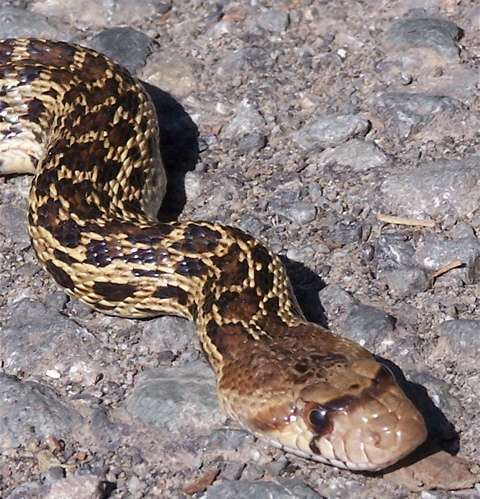 For defense, the gopher snake frequently pretends to be a rattlesnake.